“The defense of Palestinian culture.”
In conversation with the director of the Palestinian Museum in Birzeit.
“They want to erase our memories.”
—Amer Shomali
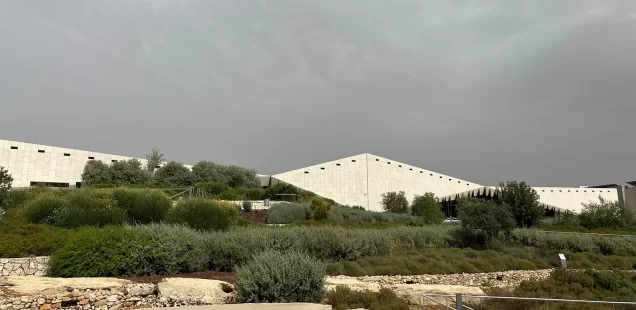
31 March—I will always remember my first sight of the Palestinian Museum. Its austere geometry and dazzling white limestone is arresting in every sense. Deeply recessed windows punctuate the facade with rhythmic precision, playing a contrapuntal motif on the expanse of stone. Despite its modest size—3,500 square feet—the building has all the presence and weight of an ancient desert monument. I stood in the hot sun and stared.
Designed by Heneghan Peng Architects of Dublin, the museum won a 2019 Aga Khan Architecture Award for sustainable construction. Sustainability of a very different kind was what the judges focused on when they announced their decision. The jury of three had this to say:
[The museum is a] powerful embodiment of a cultural identity under duress at the intersection of land and architecture, nature and people. The building’s very existence — built despite a condition of occupation and siege — can be understood as nothing less than an act of hope for current and future generations.
If the building itself is an act of hope, what happens inside is nothing less than the resistance of cultural erasure. It affirms Palestinian presence and continuation on the land as expressed in art, archival preservation, and museum practices rooted in community and identity. Theft and destruction of Palestinian cultural and historical artifacts has been ongoing since European Jews began the process of stealing the land itself along with Palestinian identity in order to sustain the lie of their indigeneity.
I met Amer Shomali, the museum’s innovative director, in May and again in December 2024. Shomali, his small team, and the institute they oversee stand at the dangerous front line of Palestinian resistance. And they know it.
Palestinian artists, writers, poets, and intellectuals have frequently been targeted for arrest and assassination. Museums, cultural centers, schools, universities, churches and mosques—institutions of culture and learning—were strategically targeted by Israelis early in the Gaza genocide. To thoroughly obliterate a people—as is the intent in genocide and ethnic cleansing—they must be erased from history and memory.
The Palestinian Museum defies Zionist erasure as it challenges and reimagines the very idea of what a museum is, who it serves, and how it’s experienced.
This process of imaginative reinvention was precisely what most interested me about the museum and why I had arranged to meet Shomali a second time. I wanted to know how the practices (museography) and theoretical and conceptual underpinnings (museology) of the Palestinian Museum differed from those of western institutions.
“What does it mean to decolonize a museum and the museum experience?” I asked when we met in December. “And how are you doing that here?” We sat in front of a large computer screen in his office looking at photos as he talked—many of these are published below.
What follows is his answer. Shomali tells a story of determined and inventive resistance to a century of cultural appropriation and annihilation. The museum he oversees is an eloquent testimony to the creativity, tenacity, and ineradicable spirit of the Palestinian people.
I have added minimal commentary (in italics) where necessary.
—C.M.
Amer Shomali
Let’s start with the term decolonize. Decolonizing a museum does not apply to the Palestinian Museum specifically. Instead I would say “decolonizing the British museum” for example. “Decolonizing the Louvre.” Repatriation of antiquities and artifacts looted over the past centuries. That is decolonizing the museums in Europe and the West. Changing the narrative, rewriting it in a proper accurate way, giving the attribute to the original creators of those objects, I think that’s decolonizing the museums in the West.
Here, in Palestine, I think the proper term is localizing the museum and liberating it from the colonial standards. For the Palestinian Museum I see that we should be liberating ourselves from the colonial standards of what is a museum.
You can’t compare the Palestinian Museum to the British Museum, for example. The British Museum is a vault that contains the loot from all over the British empire, things from India, Egypt, Syria. You can’t compare that museum and whatever they have in their storage with the Palestinian Museum.
Eighty percent of our national collection—historical Palestinian artifacts—have been looted and eighty percent of our audience can’t even reach the museum physically. Our audience is the Palestinian people and eighty percent of our people—either in Gaza or in diaspora or in the refugee camps in Jordan and Lebanon—can’t reach the museum. So we’re a very specific case.
If we want to keep working trying to mimic the western traditions in the museums, the museum tradition, I think we’re going to be stuck and we’re not going to succeed. So we need to liberate ourselves. We should have the confidence to create our own museum theory, our own way of working, and our own traditions.
■
If you look at the museum traditions in the west it started in the royal courts where the king would invite his friends and the royal family and the other rich noble people to come to see his treasures from the colonies. But in the east we had a different tradition, we call it Mawkib موكب, which means procession.
Basically, the Khalifah would send his soldiers and his servants carrying the valuable objects in his collection and they would walk through the city. People could look at that and people would sometimes get their own things and stand in the street. So it’s a community experience, a decentralized community experience. It’s a different tradition, a different way of thinking. But because of years of being under the British Mandate (Palestine) and the French Mandate (Syria and Lebanon) we started to think that we should look like our oppressors to be worthy.
If you rethink the experience of the museum, decentralizing the museum, especially in the Palestinian case, is very important. I’ll show you some of the experiments we’ve been trying to do to decentralize and liberate the Palestinian Museum.
C.M.: As he turned the discussion, Shomali recited a famous quote from George Orwell’s dystopian masterpiece, 1984: “Those who control the present, control the past. Those who control the past control the future.” No country has mastered this diabolic form of domination better than Israel. The Zionist state has long understood the necessity of narrative control to its project of ethnic cleansing and the creation of a Greater Israel. To illustrated this point, Shomali recounted several stark examples of Israel’s project of cultural annihilation.
■
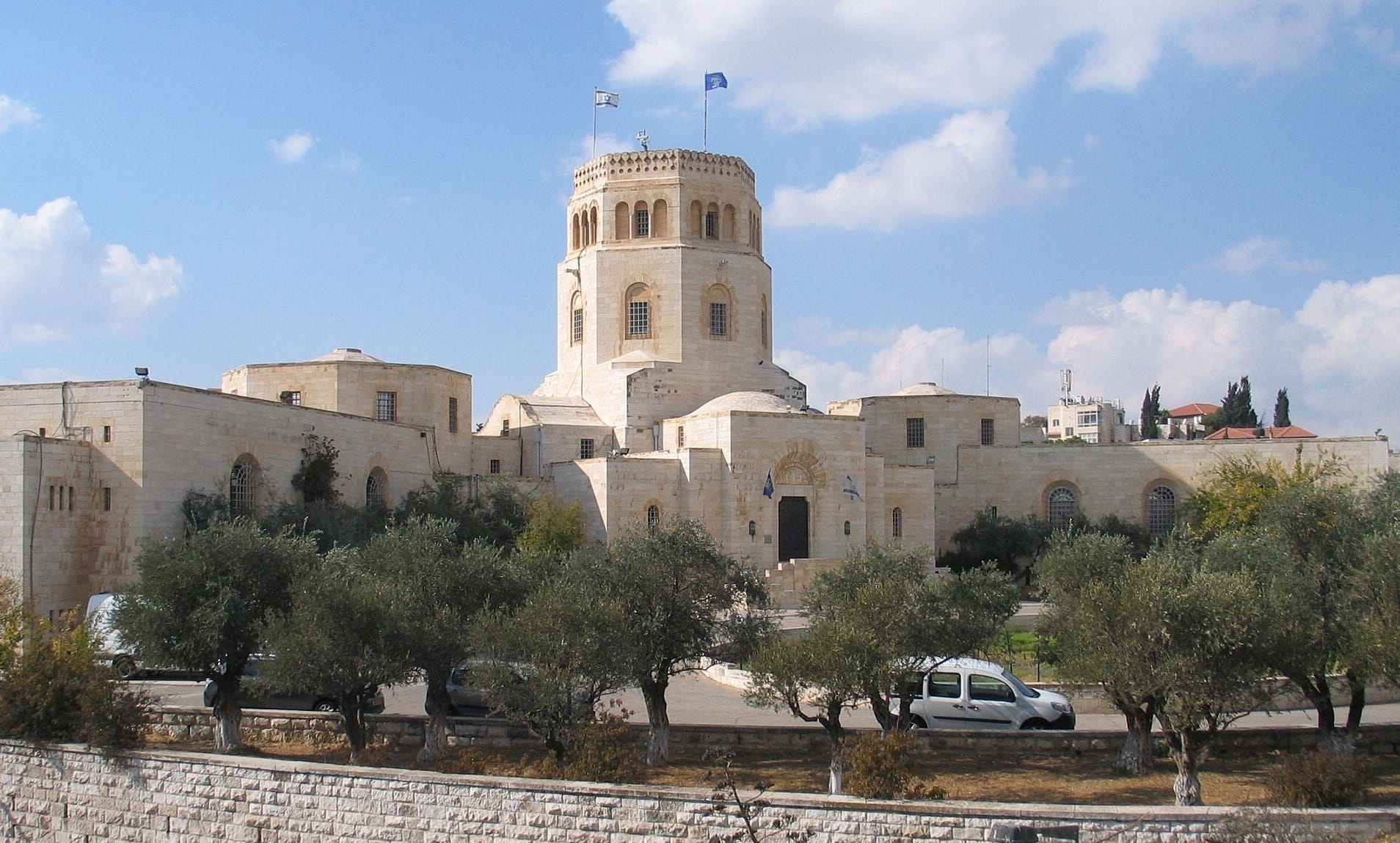
This is a photograph of the old Palestinian Museum—the national Palestine Archaeological Museum in Jerusalem. The whole museum was stolen including the collection in 1967. They carved a new name on the building and we lost our museum. They took the Dead Sea scrolls and everything else is the same as it was on the day it was stolen. Since 1967, everything is the same. The displays are all the same. They just carved a new name on the building in Hebrew.
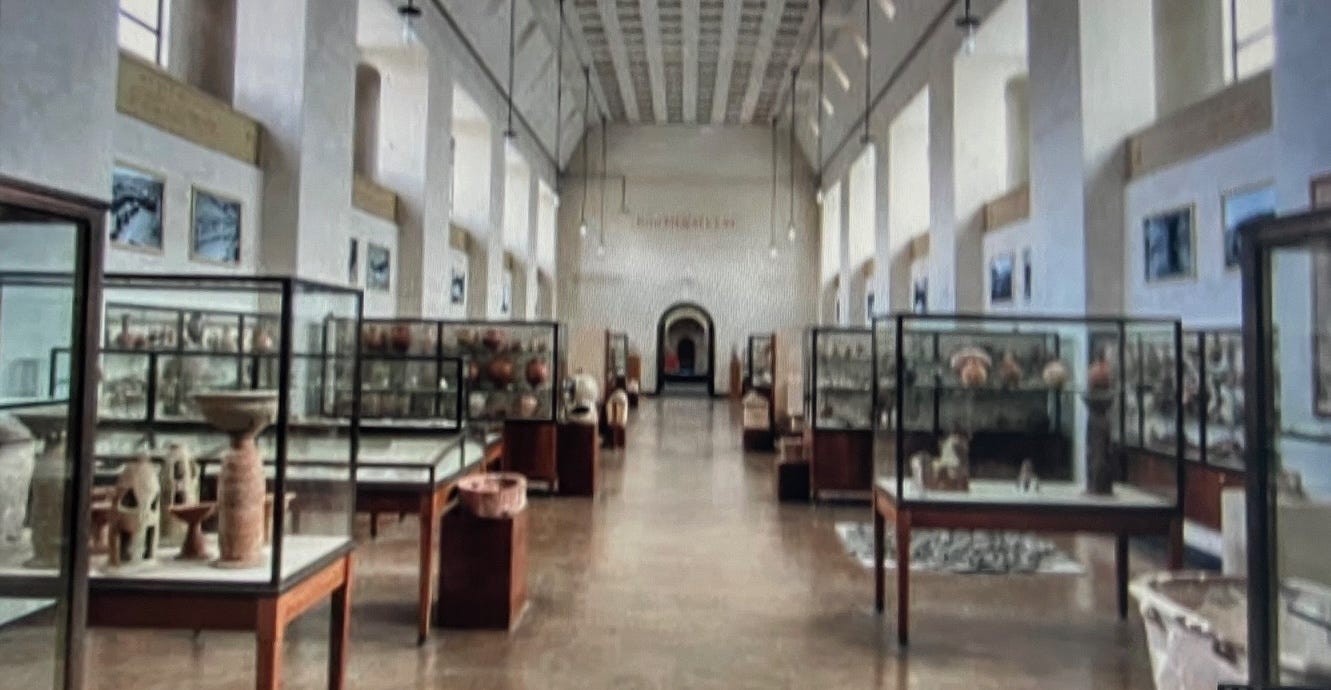
C.M.: The photo below shows the inside of the museum with displays as they were prior to June 1967 when the institution and its contents were stolen following Israeli’s so-called Six Day War. The museum was subsequently renamed and is now called the Rockefeller Archeological Museum.
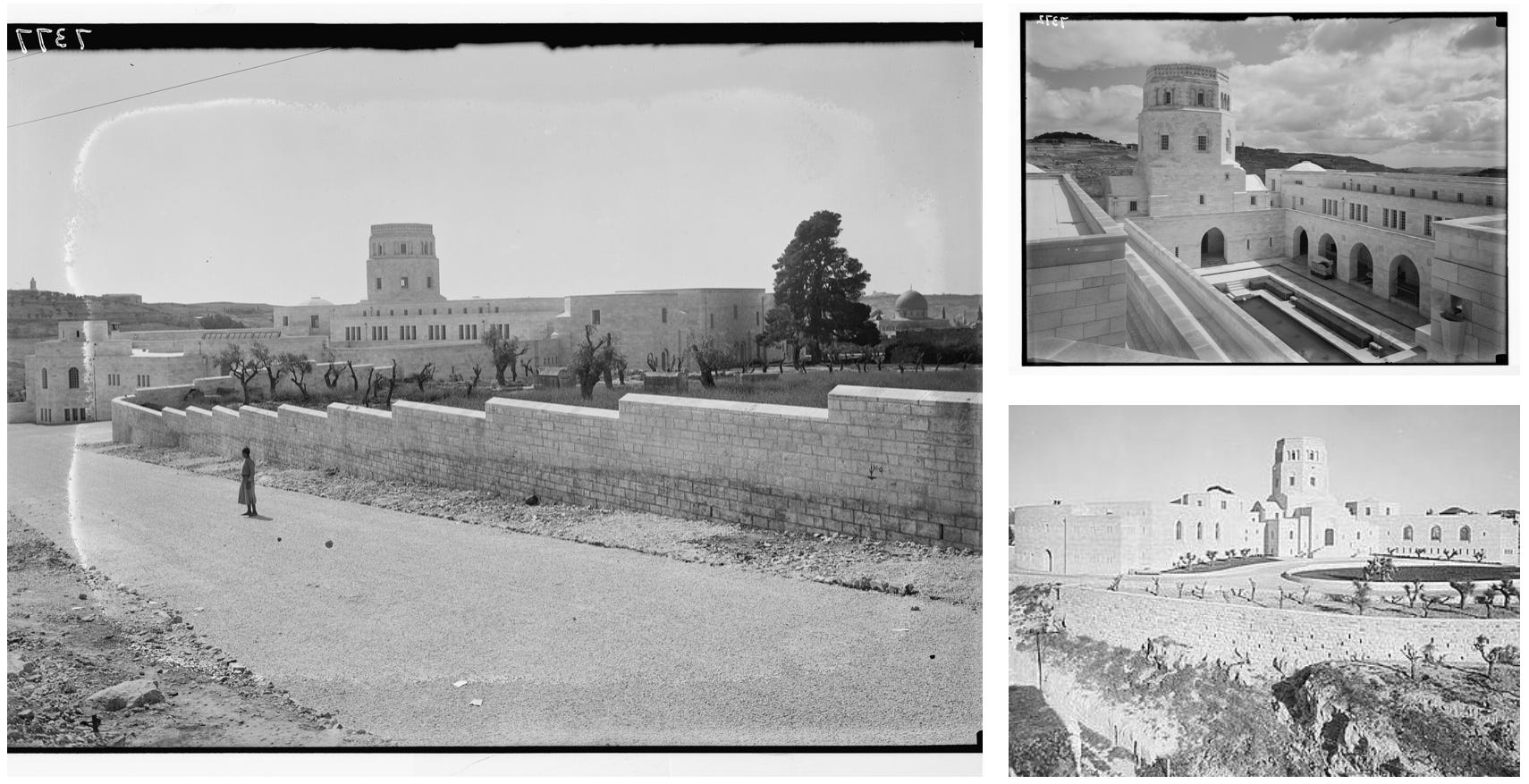
C.M.: The museum after its founding in1938 and before the Nakba:
■
This is an important quotation by the Israeli Minister of Strategic Affairs:
There needs to be a radical change in the Palestinian education system. Without these structural changes Israel will find itself facing a hostile population.
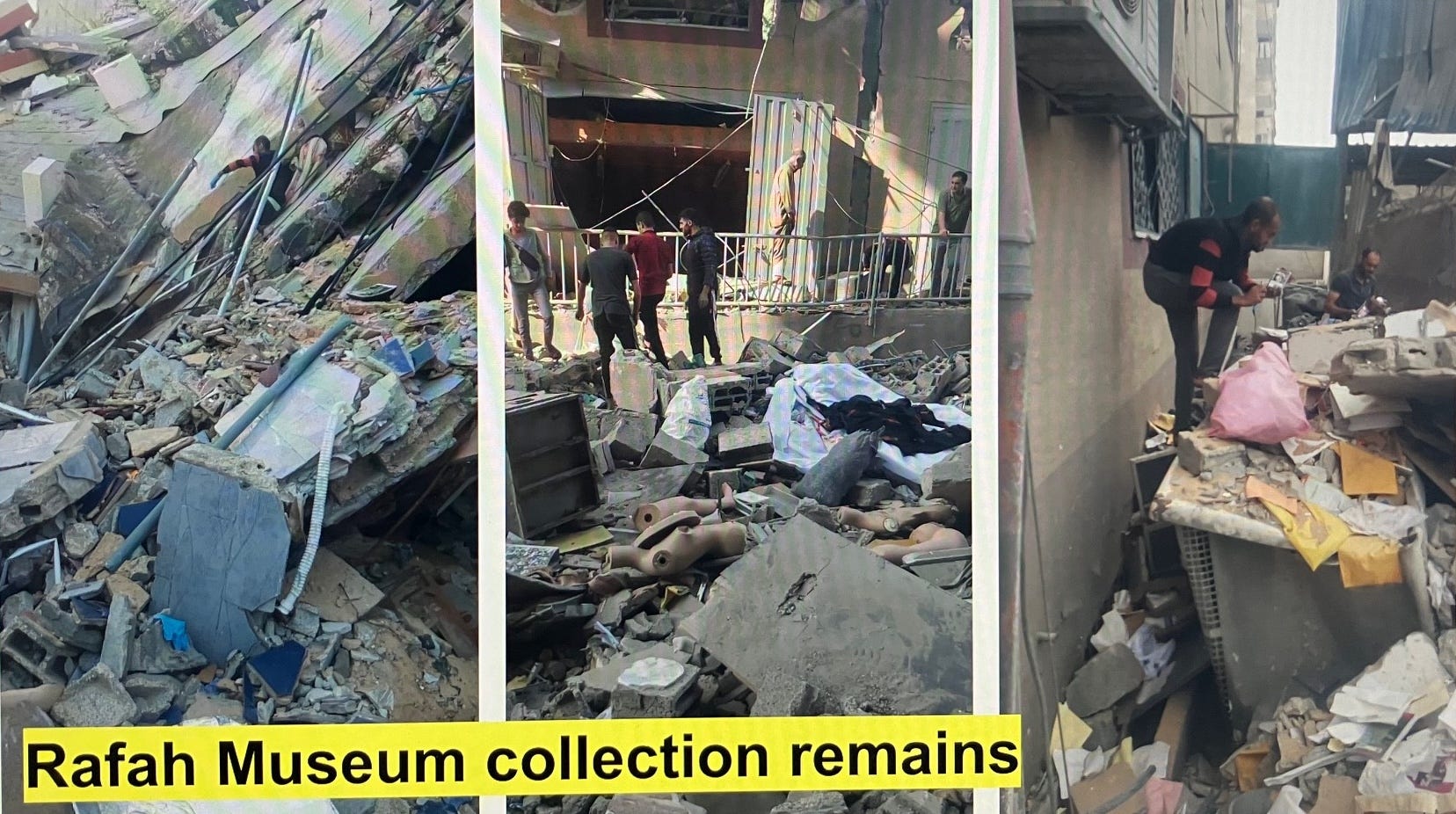
And this is why, after 7 October, they bombed the museums and the art galleries and the archives before even bombing anything related to Hamas. They started bombing the cultural institutions on October the 28th. And the first building that was bombed in Rafa was the museum. Weeks later they started bombing other things in Rafah. But the first thing that was bombed in Rafa was the museum.
This is not something that happened by coincidence. It’s intentional and strategic. It’s strategic because they want to erase our memory and our culture. It’s not enough to erase Palestinians from the land. They want to erase our memories so we don’t know how to recreate Gaza in the future.
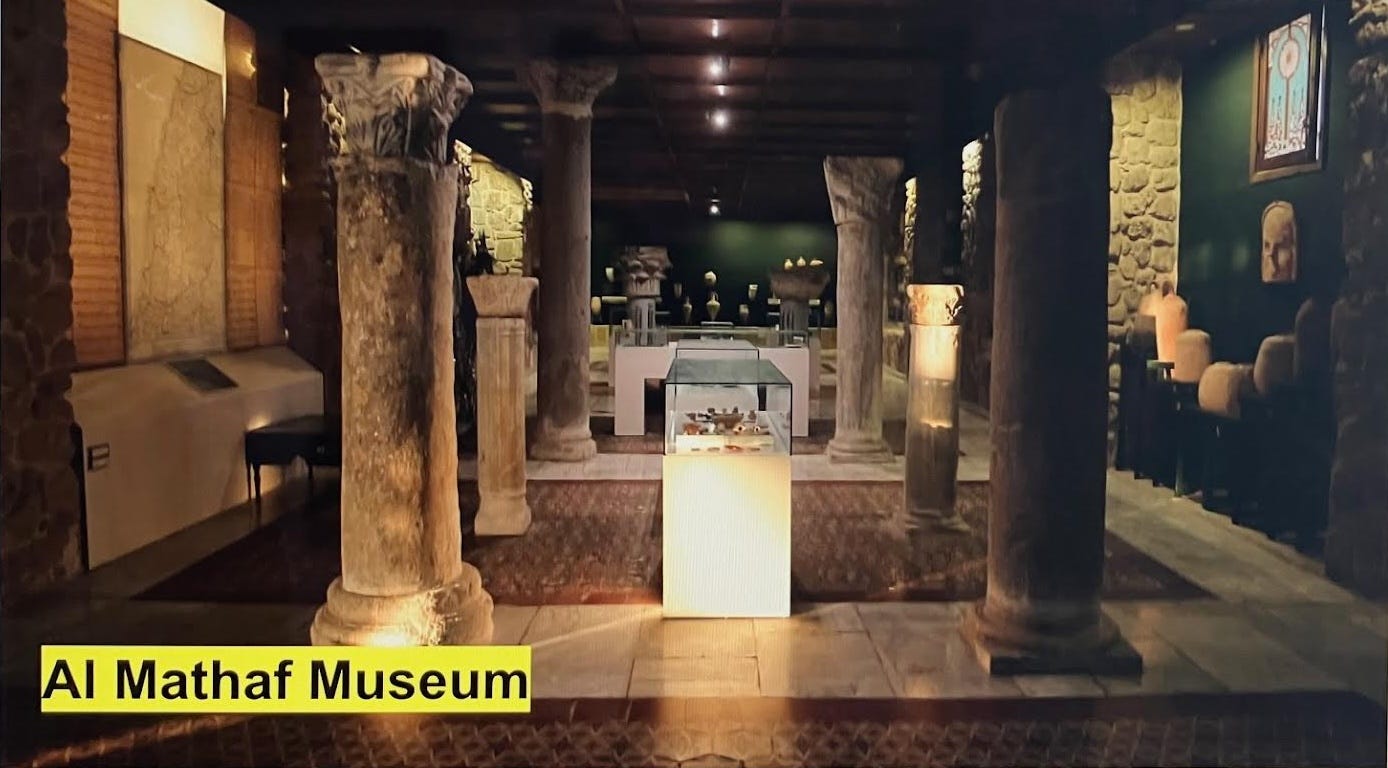
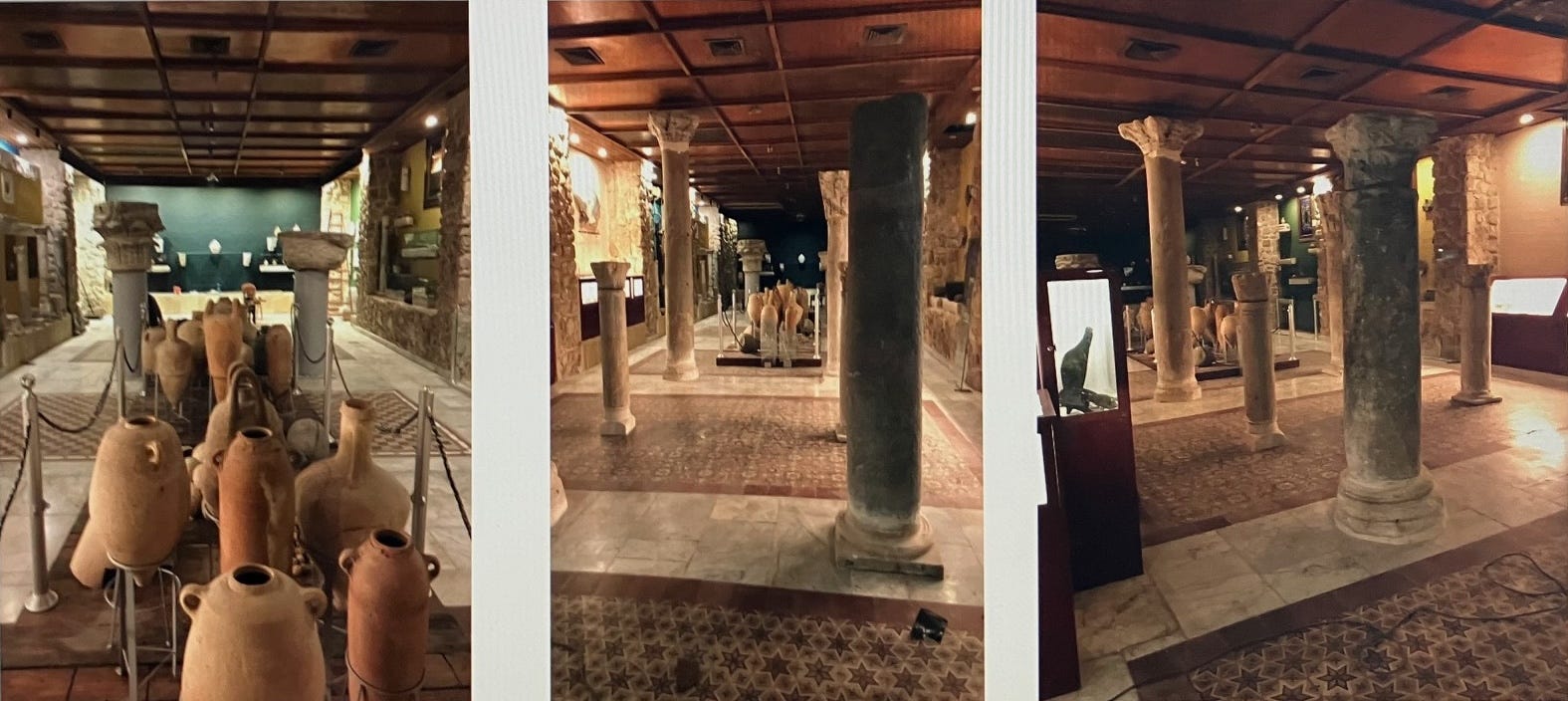
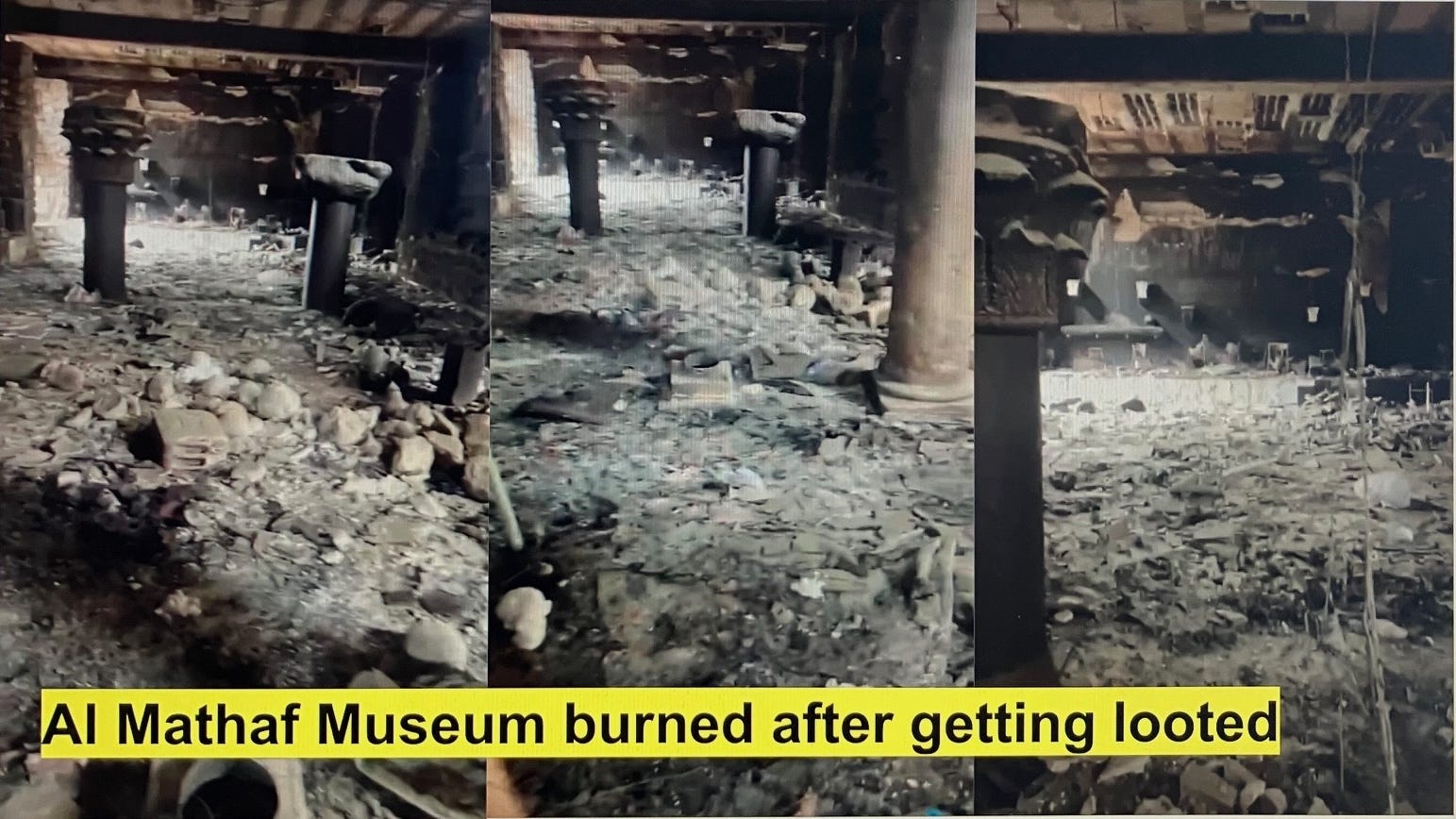
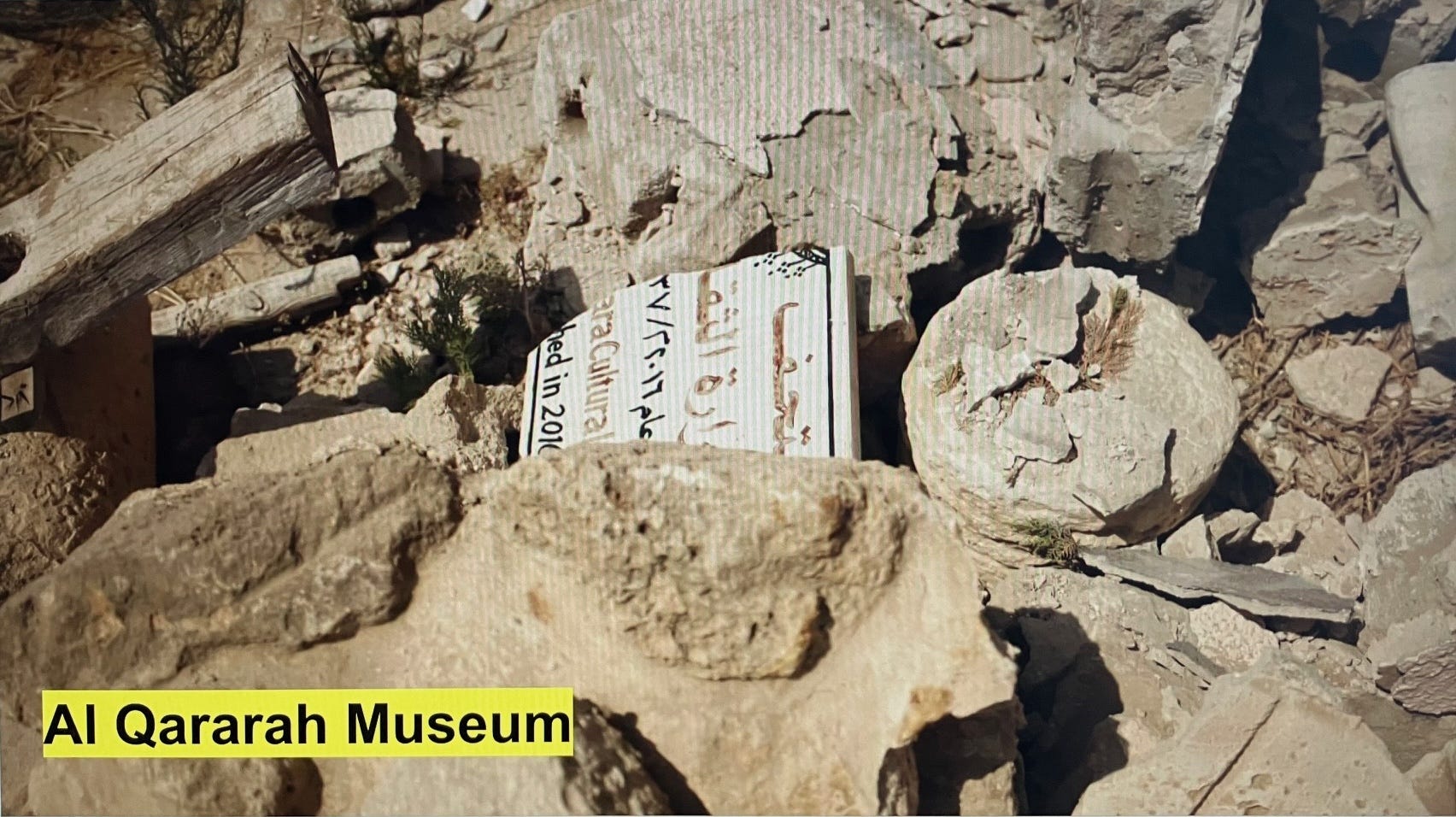
This photograph (see below) is a museum in Gaza, Mathaf al-Funduq. It’s a small cultural center with archeological artifacts that was looted and burned down early in the genocide.
C.M.: Al–Mathaf was bombed and then looted and set on fire. The following pictures show the museum before and after it was destroyed.
This was the storage space of the Mathaf museum (see photo below, red arrow). Look at this building. They bombed the storage. They didn’t care for the rest. They bombed the storage. They knew where it was and they bombed it.
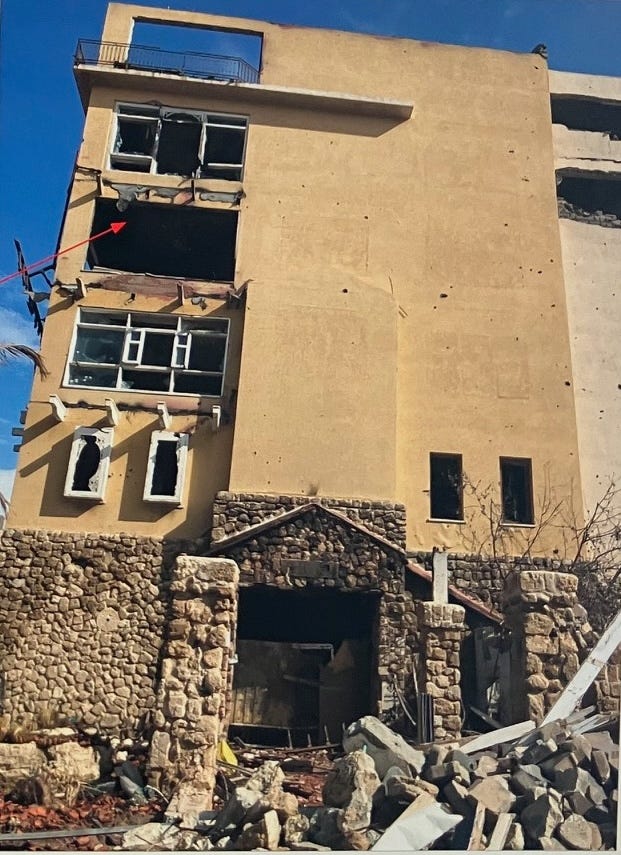
C.M.: The third floor storage room was blow up in a precision drone attack. The Israelis knew where the museum’s archive and collection was and intentionally destroyed it. Every museum in Gaza was targeted and destroyed. When possible, the Israelis looted artifacts—some of which were put on display at the Knesset.
■
They looted the national archives in 1948. And again in 1967, in 1982, and in 2002. They destroyed every museum and cultural institution in Gaza.
So how do we at the Palestinian Museum function?
One of the major projects we have is the Palestinian archives. We’re creating a digital archive. We have different copies on the cloud here and there are backups in bank safes in Switzerland and in Palestine. In that way it can’t be looted again. It’s a virtual archive. We’re building it bottom up.
We have almost 400,000 documents and photos and sound bytes and videos compared to 5 million [Palestinian artifacts] in various Israeli storage facilities—looted documents, artifacts, and archives. So we are still 1 to 10. But we are creating an alternative archive. Instead of having the official archive—which has been stolen—we are recreating the full story, the full history, from a mosaic of stories from people’s houses and private collections. It’s an alternative to the official archive.
■
We have an exhibition we’re working on with different museums around the world. Basically, we are storing parts of our collection in these museums. The object or artifact is stored in a box with a logo of the Palestinian Museum, identifying it as belonging to the Palestinian Museum collection. Next to that is a brief explanation:
Inside this box there is a Palestinian artifact from the collection of the Palestinian Museum. Because of what’s happening in Gaza—bombing museums, killing artists, burning paintings, and looting artifacts—we are safeguarding part of the Palestinian Museum collection until the genocide is over.
You don’t see the painting or object inside the box. All you see is the box.
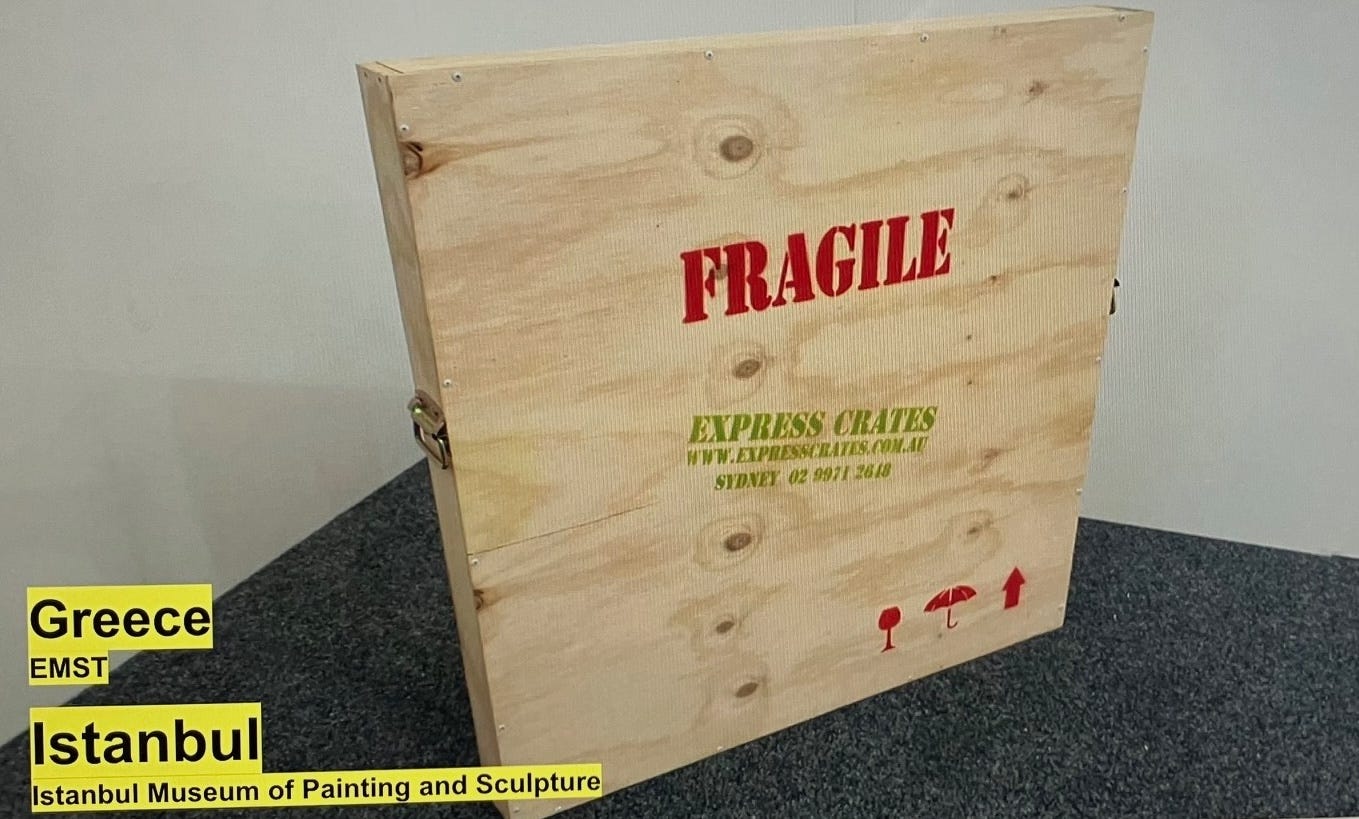
C.M: The storage boxes are on display at host museums. In this way, museums in other countries help to preserve Palestinian art and historical artifacts, keeping them safe from Israeli theft and destruction, while raising awareness about Israel’s century-long project of destroying Palestinian culture.
■
The extreme experiment we did was an exhibition called Gaza Remains the Story. This exhibition represents a new tradition, it introduces a new approach to [creating an exhibition].
C.M.: Gaza Remains the Story exists in the form of electronic files that are accessed on the museum’s website. These electronic images, which include historic black and white photographs, pictures of textiles and paintings, experience boards about the history of Gaza, are designed to be downloaded and printed—at any scale large or small depending upon the available space. The show can be hung in any venue anywhere in the world. It creatively bypasses Israeli military censors who don’t allow Palestinian artifacts and art to travel outside of the occupied territories, and who would almost certainly steal or destroy them.
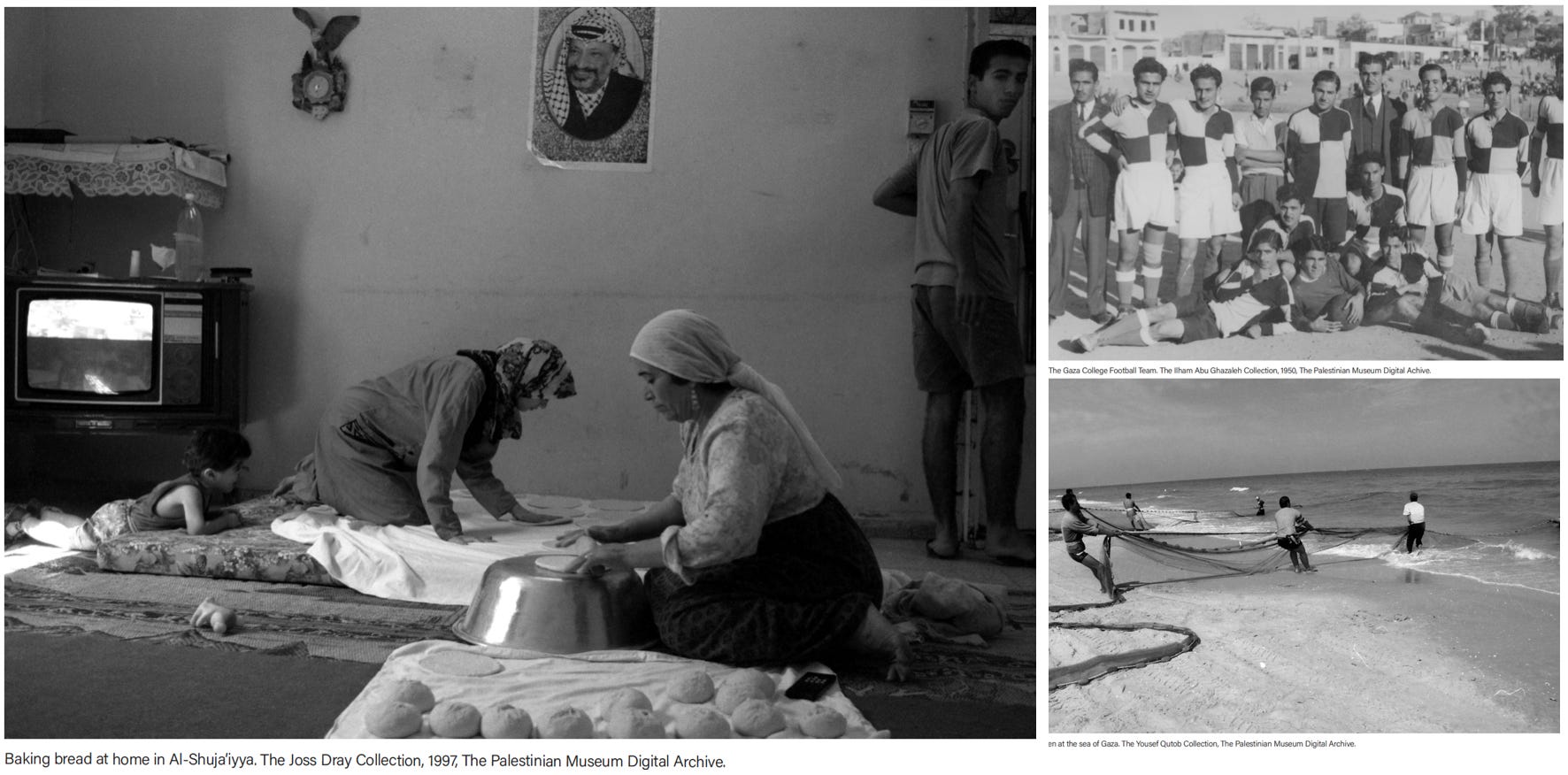
We created an online folder in which we have photos from the archive: paintings, artworks, photographs, videos, and podcasts. We created experience boards that tell the story of Gaza under continuous occupation and siege. There’s a promotional media kit that includes a poster for the exhibition, a social media post, for instagram or FaceBook—everything according to the size. We even have a file that enables you to cut and past the tags for the show. Everything.
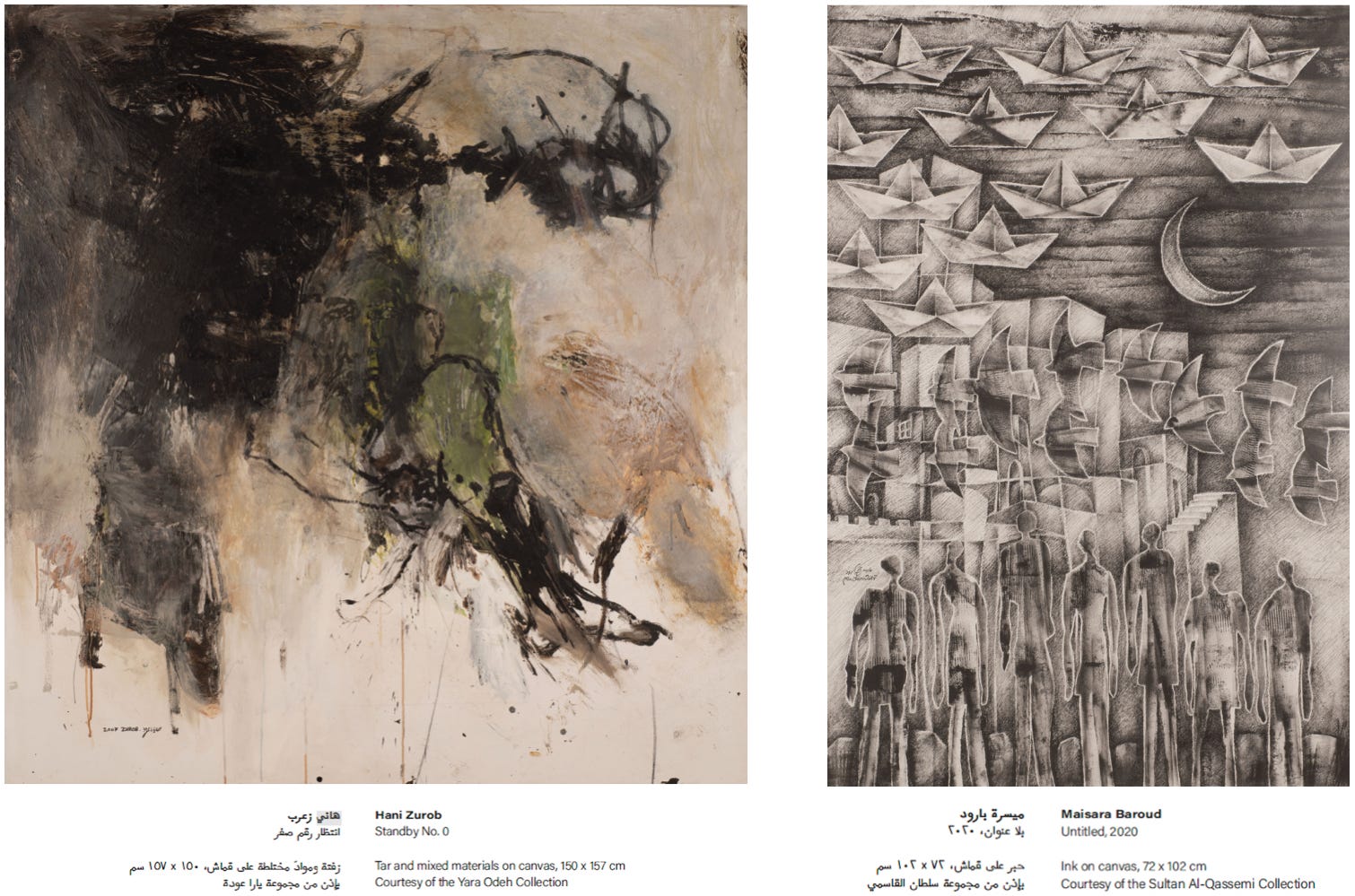
Even if you don’t know how to make an exhibition, you just download the folder and there you have detailed instructions: “Cut it here, put it there.” Over the past month and a half we were booked for 109 venues around the world. We already did 40 exhibitions around the world. It didn’t cost us anything. The community—local exhibition curators who don’t need any prior experience—picks and chooses from the folder and they created their own exhibition. So this is another way of rethinking the museum.
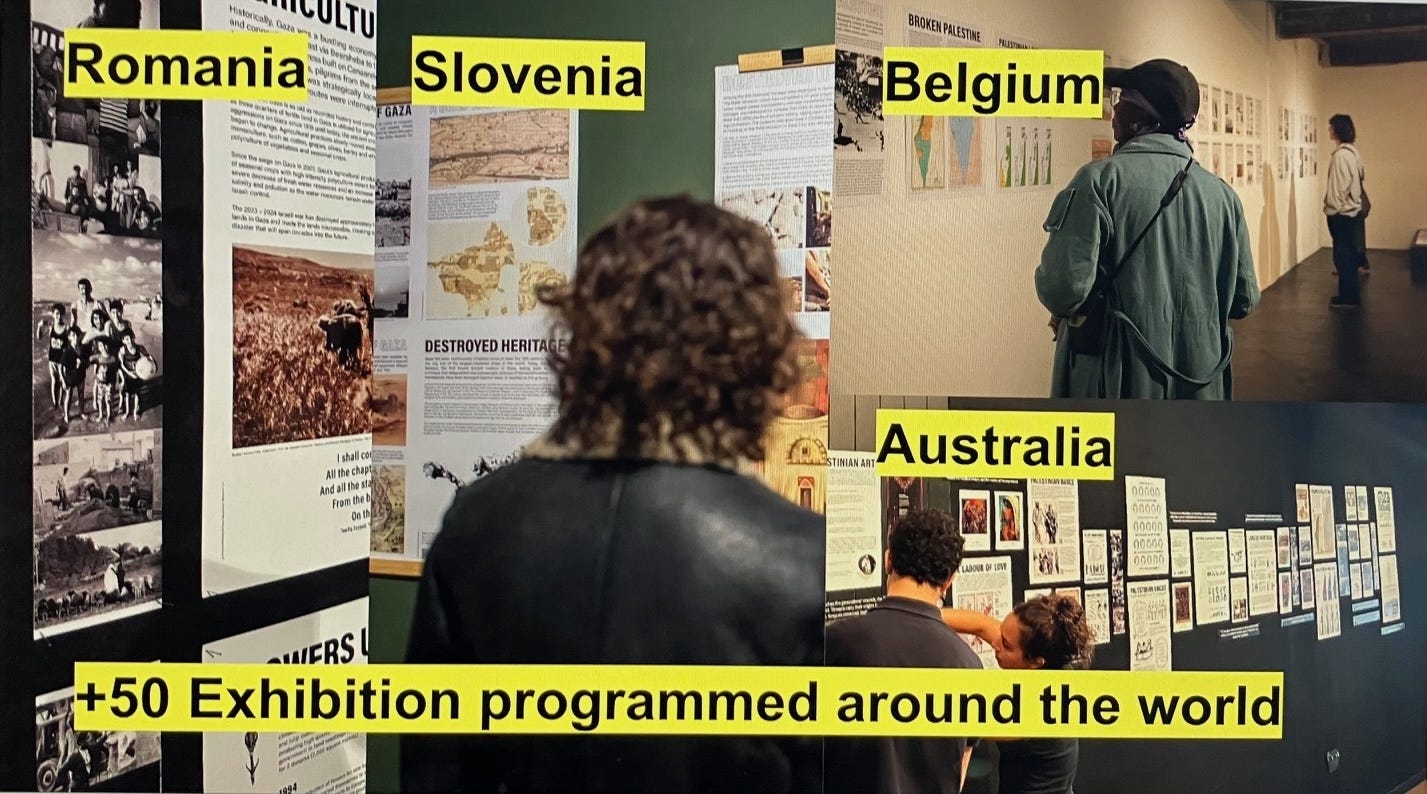
Usually a museum has original artifact, expensive object, with people protecting these valuable things. But in this case, the most important thing is amplifying the Palestinian narrative. Why should we care about the original artwork or not? We should care about amplifying Palestinian voices. So, if you free yourself from the heavy traditions of the colonial museums, you can suggest an alternative way, an alternative theory, of what a museum should look like in a colonial context.
Each venue curated the show differently, each had a different design. Everyone was involved in the decision making [what to print and exhibit from the electronic files]. Some venue actually added paintings, because they had Palestinian paintings in their collection. And some people brought traditional Palestinian dresses. So it’s an alive experiment. The Palestinian Museum is a resource, a tool, people can use and pick and choose what works.
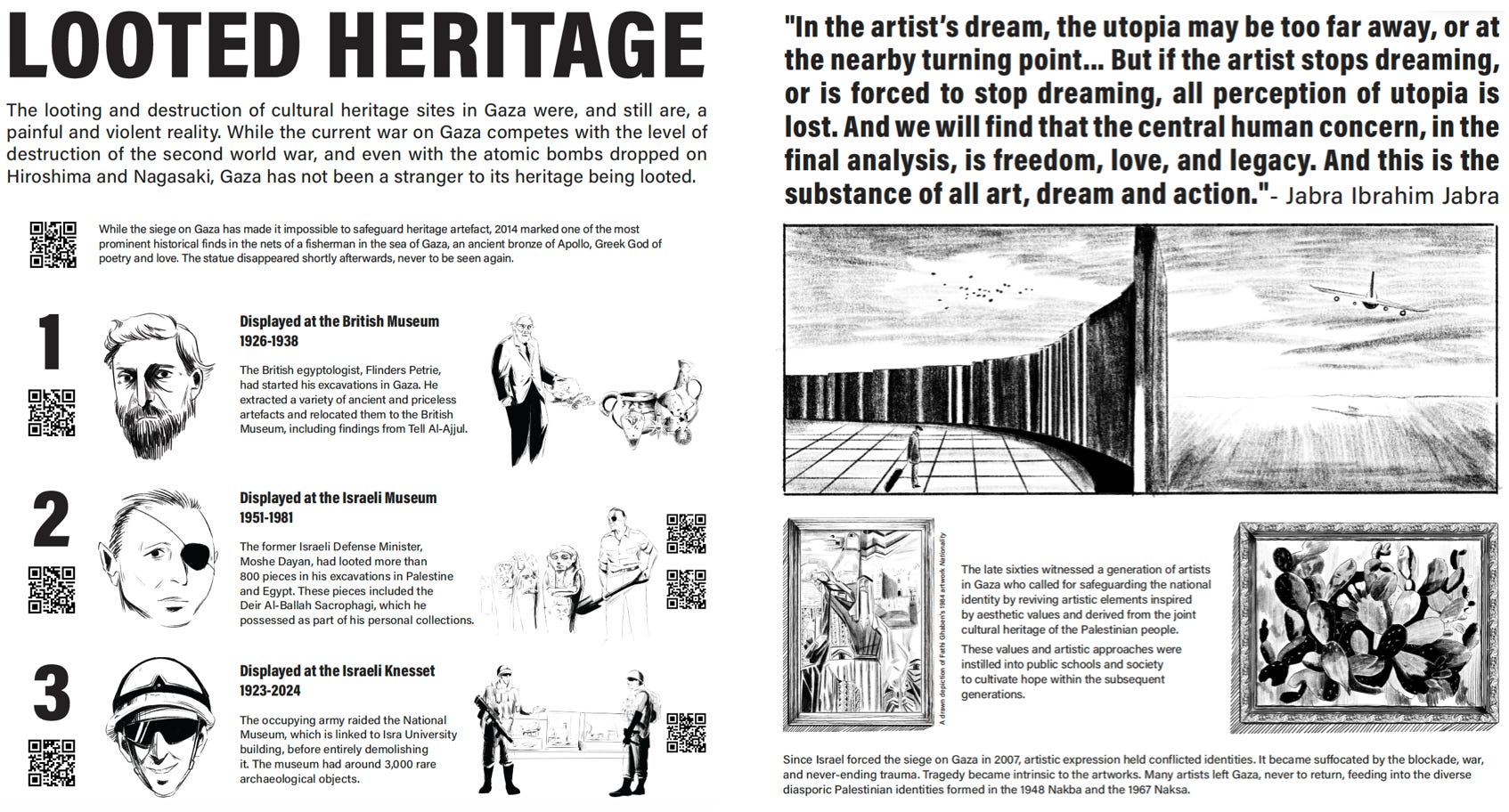
We get feedback from people exhibiting this show [Gaza Remains the Story]. Part of the process is sending us feedback. Whenever we get a comment, for example, saying “this map is not clear.” Or, “this terminology is not correct.” Or, “we suggest you add another storyboard in between those two to explain this one.” We do that. We update that folder. And the next exhibition will have an updated electronic version. So it’s a two way process, which is not common in the museums. In a museum they have a painting, they have a gallery.
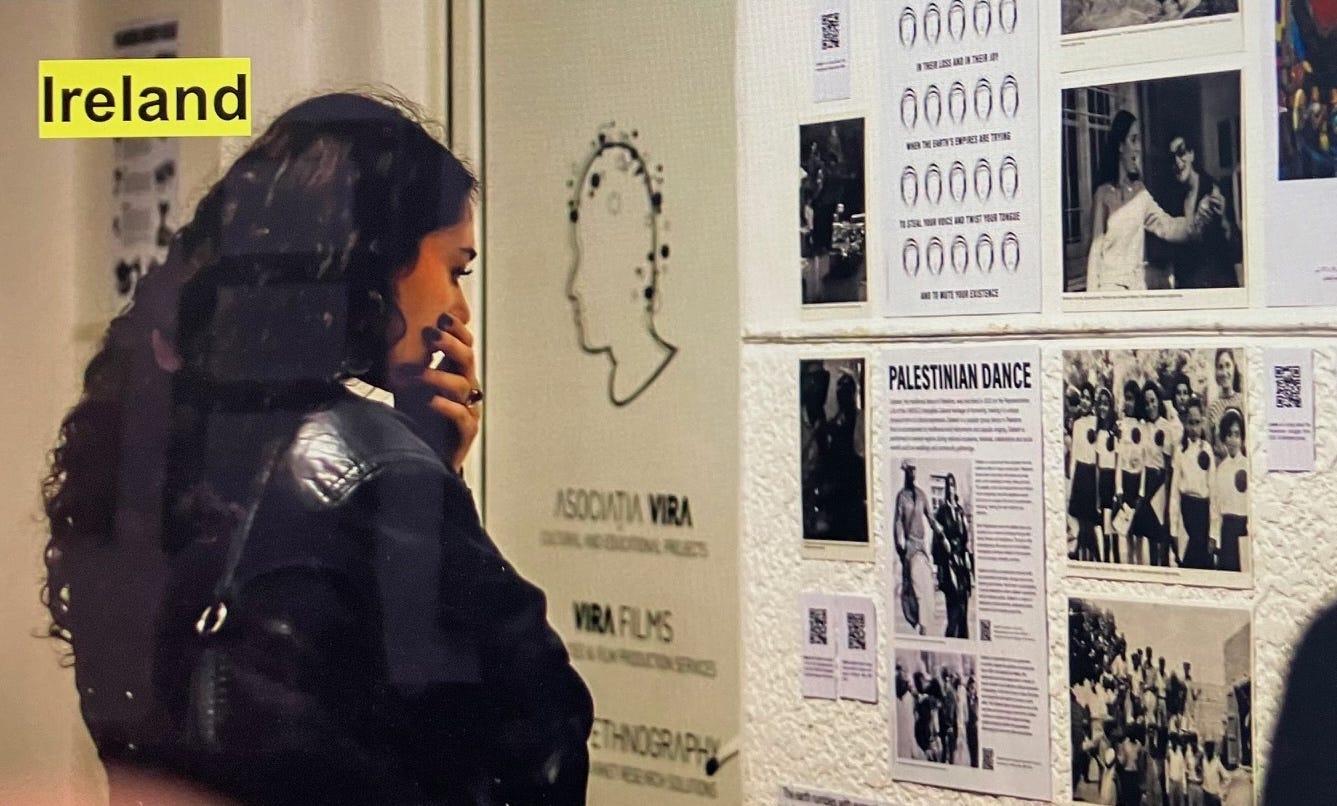
We’re offering an entry point for more involvement and ownership. We’re creating a museum without borders. This [the Palestinian Museum] is the mothership but we have satellite museums all over the world. If you think of the museum beyond the boundaries of its walls then you have this kind of thinking.
In our museum we are a team discussing things. I opened up the museum for intellectual input from outside of the employee circle. Everyday we have artists coming and curators who are not on the payroll of the museum. They suggests ideas, they send emails and messages, and we follow up on that. So we’re open to receiving ideas from other people.
As a small museum we don’t have the budget to hire all the staff and intellectuals to pitch in their ideas. But if we offer the space and we always credit people, they are willing to be involved.
So this is how we see decolonizing the museum. We liberate ourself from the colonial traditions. We don’t see the museum as part of the entertainment industry. We see our museum as an institution on the frontline. We’re not part of the entertainment industry we’re part of the resistance.
■
Published simultaneously at Winter Wheat.